DUS Auto Parts
DUS Auto Parts
DUS Auto Parts
Direct from top-tier Chinese manufacturing facilities. Precision-engineered solutions designed to optimize performance, traction, and overall fleet operating efficiency.
An Industry Whitepaper on Circular Economy, Structural Integrity, and Total Cost of Ownership Optimization
In modern commercial transportation and heavy-duty logistics, tires represent one of the top operating expenditures. To minimize the cost-per-kilometer, global logistics enterprises are shifting from single-use low-cost tires to premium retreadable casing architectures. Designing and exporting a tire capable of undergoing multiple retreading lifecycles requires highly specialized chemistry, structural design, and precision manufacturing.
High-tensile steel cord structures maintain casing stability across three to four retreading runs, reducing fleet tire overhead by up to 45% compared to continuous new-tire purchases.
Innovative base compounding reduces heat generation within the belt package, preventing vulcanization reversion and ensuring bead safety during long-haul interstate applications.
Producing a high-quality retreadable tire consumes 70% less oil and generates 80% fewer carbon emissions compared to manufacturing a standard single-use budget tire.
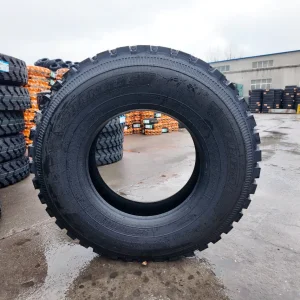
For custom OEM truck tires, the secret to longevity lies beneath the tread. The structural foundation must resist extreme mechanical stress, dynamic loading, and road debris penetration. Premium casings feature high-density, brass-coated steel cord wraps that resist corrosion and cable fatigue. Additionally, the innerliner compound is enriched with halobutyl rubber to prevent oxygen and moisture infiltration into the steel plies, mitigating interior cable degradation.
Furthermore, specialized bead area reinforcement (such as heavy-gauge wire bundles and high-rigidity bead fillers) helps prevent cracking at the rim interface. This meticulous assembly ensures the tire casing survives severe stop-and-go regional logistics, commercial dump-truck operation, and high-speed highway shipping, leaving the casing in optimal condition for future retreading processes.
Evaluating the Cost-Efficiency and Technical Dominance of Chinese Export Hubs
As the epicenter of the global tire production ecosystem, China's radial tire factories offer unparalleled supply chain integration. The direct coordination between local raw material suppliers (natural rubber, high-grade carbon black, and steel cord) and tire manufacturing lines results in exceptional efficiency. Advanced automation, automated raw material distribution systems, and AI-driven quality inspection scanners minimize human error and ensure product uniformity across huge production batches.
Our manufacturing centers utilize highly integrated material sourcing pathways. By housing raw synthetic polymer synthesis, natural rubber processing, and wire drawing units in close geographical proximity, we optimize production flow and mitigate transportation lead times. This vertical configuration allows OEM clients to quickly adjust tread compound specifications and structure configurations based on global market developments.
Every TBR casing designed for exporting must undergo rigorous diagnostics. Industry-leading factories use Shearography Laser Interferometry and High-Resolution X-Ray Systems to inspect for interior air pockets, belt distortions, or structural variations. These advanced measures prevent damaged or defective casings from reaching global distribution channels.
This robust infrastructure allows Chinese manufacturers to offer customized casing features at a competitive price. Global fleet operators can procure high-durability tires designed for multiple retreads without overstretching initial capital expenditures, maximizing their operational ROI.
Customizing tire architecture to match regional climates, legal mandates, and operational settings
Exporters of retreadable truck tires must conform to regional road safety, rolling resistance, and environmental standards. We ensure all tires destined for international distribution centers are fully certified: US DOT, European ECE (ECE R109 for retreading), EPA SmartWay verification, and specific regional requirements such as GCC (Gulf Cooperation Council) for high-temperature durability, and SASO for Middle Eastern markets. Compliance ensures smooth customs clearance and protects fleet operators from regulatory penalties.
Operational conditions vary significantly between markets. A standard tire compound that excels on smooth European highways may fail prematurely on rough construction tracks in South America. We specialize in configuring radial truck tire architectures to excel across distinct environments:
Designed with micro-sipes and low rolling resistance compounds. These structures reduce tread wear and fuel consumption during prolonged interstate runs under constant speeds.
Engineered with reinforced sidewalls to resist curb scrubbing, combined with cut-and-chip resistant compounds to withstand constant stopping, starting, and tight maneuvering.
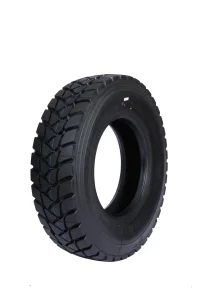
Features ultra-deep tread depths, heavy-gauge steel breaker belts, and a rugged tread layout to deliver maximum traction and casing protection on rough, unpaved surfaces.
Established in 2017, Shandong DUS Automotive Parts Co., Ltd. focused initially on the research, development, design, and manufacturing of high-end car wheels. In response to the rapid expansion of the global vehicle aftermarket, the company has leveraged its engineering and supply chain expertise to deliver integrated wheel and tire assemblies for worldwide distribution.
Guided by our foundational business philosophy of "Good Quality, Customer First," we work to develop world-class products characterized by high performance, structural safety, and long operational life. Today, our export footprint spans diverse markets across North America, Asia, Europe, and Africa.


We supply products to 22 countries and regions, including the United States, Canada, South Africa, Japan, and Southeast Asia. Supporting wheel modification, performance upgrades, and varied fleet requirements, Shandong DUS Automotive Parts Co., Ltd. helps operators build safe, high-performance vehicle setups. Our focus remains on innovation and engineering excellence as we expand our role in the global aftermarket.
Comprehensive catalog spanning high-end wheels, specialized tires, and quality accessories.
Optimized manufacturing and volume purchasing help keep production and material costs competitive.
Strict QC procedures and modern testing equipment support stable, reliable product output.
Integrated global shipping pipelines and professional customer service ensure timely delivery.
Addressing the core technical concerns of fleet procurement managers and distributors
Engineered for high load capacities, extended mileage, and reliable performance across varying road surfaces.