 DUS Auto Parts
DUS Auto Parts
DUS Auto Parts
China’s diverse roads demand careful tire attention. Urban traffic, mountain routes, seasonal rain, and heavy loads can change tire performance quickly. A small pressure loss may increase heat, steering effort, and fuel consumption. Uneven wear can also signal alignment, suspension, or loading problems.
This introduction presents China’s Top 10 Tire Care Tips for Vehicle Maintenance, based on practical workshop checks and guidance from tire manufacturers. The recommendations focus on pressure, tread depth, rotation, alignment, balancing, valve condition, and visible damage. These Vehicle Maintenance Tips Related To Tire Care can help drivers notice problems before they become roadside failures. Check pressures with a reliable gauge when tires are cold. Look closely for cuts, bulges, embedded stones, or exposed cords. Details matter.
Professional inspections remain important. A trained technician can identify internal damage that an outside inspection misses. Manufacturer specifications should guide pressure, load, speed, and replacement decisions. Local driving conditions matter too. Some drivers inspect only before long trips, which is not enough. Monthly checks are safer. After striking a pothole, inspect promptly. Do not ignore vibration.
The guide also recognizes a practical limitation: tire care cannot prevent every failure. Weather, road debris, age, and driving habits still influence safety. However, consistent checks create useful warning signs. A few minutes beside the vehicle may protect the journey ahead. Safety depends on habits, not luck.
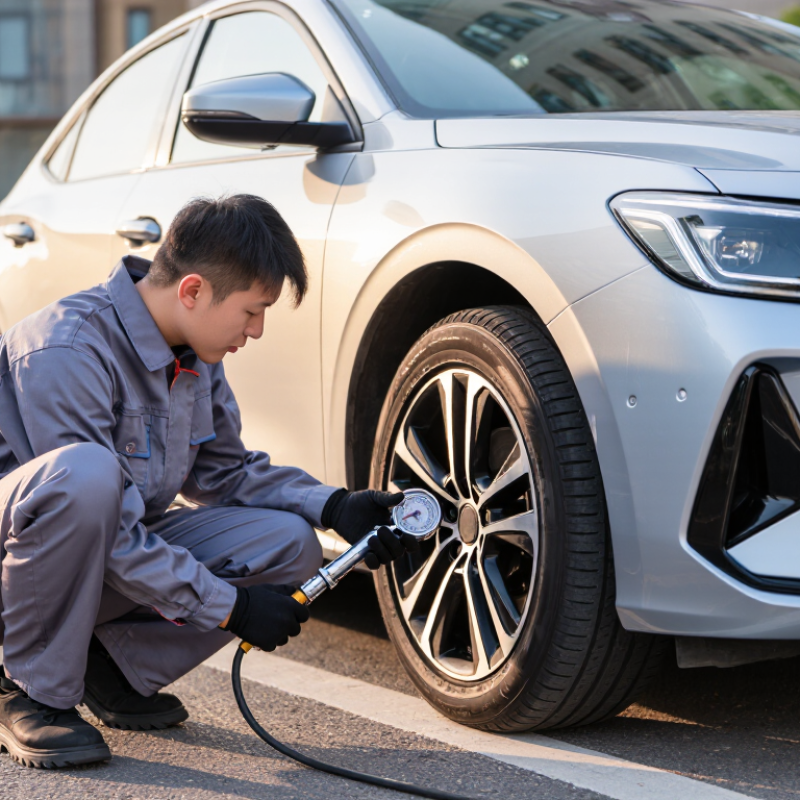
China Top 10 Tire Care Tips for Vehicle Maintenance: GB 7258’s 1.6 mm Minimum Tread-Depth Rule
China’s GB 7258-2017 sets 1.6 mm as the minimum tread depth for applicable vehicle tires. This is a compliance threshold, not a recommended replacement target. At that depth, grooves have limited water-displacement capacity. A wet road, worn shoulder, and sudden braking can quickly reduce control. Check the main grooves with a calibrated depth gauge, not a coin or fingertip. Measure the inner, center, and outer sections. Uneven readings often reveal alignment, suspension, or inflation problems.
Small details matter. A cold tire should be checked before driving, preferably after several hours of parking. The correct pressure is listed on the vehicle placard, not necessarily on the tire sidewall. The U.S. Department of Energy reports that underinflation can reduce fuel economy by up to 3 percent. It also increases heat buildup. NHTSA’s Traffic Safety Facts 2021 recorded 622 deaths in tire-related crashes in the United States. These figures are not China-specific, but they show why tread and pressure deserve routine attention.
I once focused only on the center groove. That was incomplete. Shoulder wear looked worse. Inspect cuts, bulges, exposed cords, and valve leakage every month. Replace a tire before reaching 1.6 mm when wet-weather grip has noticeably weakened. GB 7258 is a legal inspection reference, while real driving conditions demand more margin. Five minutes with a gauge can expose a problem before a long highway trip.
| No. | Maintenance Dimension | Verified Data or Standard | Recommended Action | Suggested Timing |
|---|---|---|---|---|
| 1 | Tread depth | GB 7258 specifies a minimum tread depth of 1.6 mm for applicable vehicle tires. Tire wear indicators are commonly set at approximately 1.6 mm. | Measure the main grooves with a tread-depth gauge. Replace the tire when it reaches the legal limit, wear indicators, or a safer replacement threshold recommended by the tire or vehicle manufacturer. | Monthly and before long trips |
| 2 | Cold inflation pressure | The correct pressure is the vehicle manufacturer’s specified value, normally shown on the driver-door placard, fuel-door label, or in the owner’s manual. The number molded on the tire is not usually the vehicle’s recommended setting. | Check pressure when the tires are cold and adjust all positions, including the spare where applicable, to the specified value. | At least monthly |
| 3 | Pressure-loss monitoring | A tire that repeatedly loses pressure may have a puncture, leaking valve, wheel damage, or bead-sealing problem. Temperature changes also alter pressure readings. | Do not compensate for a continuing leak by repeatedly adding air. Have the tire and wheel inspected; never drive on a visibly flat or severely underinflated tire. | Whenever a warning appears or pressure drops |
| 4 | Sidewall and tread damage | Cuts, cracks, bulges, exposed cords, punctures in the sidewall, and impact damage can compromise tire integrity even when tread depth remains adequate. | Stop using a tire with a bulge, exposed cord, or serious sidewall damage. A qualified tire professional should determine whether a puncture is repairable. | Visual check weekly and after impacts |
| 5 | Uneven wear | Wear concentrated on one shoulder, the center, or in a cupped pattern may indicate incorrect pressure, misalignment, worn suspension parts, or an imbalance. | Record the wear pattern and arrange a wheel-alignment, balancing, suspension, and pressure inspection before the damage progresses. | At every service visit |
| 6 | Wheel alignment and balancing | Pulling to one side, an off-center steering wheel, vibration, or rapid irregular wear can indicate alignment or balance problems. | Correct the underlying wheel, suspension, or steering issue rather than merely replacing the worn tire. | After pothole or curb impact and when symptoms occur |
| 7 | Tire rotation | Rotation can help equalize wear, but the correct pattern depends on tire size, tread direction, drivetrain, and whether the vehicle uses different front and rear sizes. | Follow the vehicle and tire manufacturer’s rotation pattern. Do not reverse a directional tire or move differently sized tires to incompatible positions. | Typically every 8,000–12,000 km, if permitted |
| 8 | Tire age and production date | The four-digit date code on the tire sidewall identifies the production week and year; for example, “2524” means the 25th week of 2024. Age-related cracking can occur even with usable tread. | Inspect older tires carefully for cracking, hardening, deformation, and repeated pressure loss. Replacement should follow the tire and vehicle manufacturer’s age guidance and condition assessment. | Inspect annually after 5 years in service |
| 9 | Load and speed compatibility | The tire’s size, load index, and speed rating must be suitable for the vehicle. Overloading and sustained high-speed driving increase heat and stress. | Use the specified tire size and ratings. Keep the vehicle within its permitted load capacity and avoid exceeding the legal speed limit or tire rating. | Before replacement, loading, or long-distance travel |
| 10 | Valve, wheel, and spare-tire condition | Valves, valve cores, wheel rims, and spare tires can deteriorate or lose pressure while not in regular use. | Check for valve leakage, bent or cracked rims, corrosion at the bead area, and correct spare-tire pressure. Secure the spare and confirm that the tools are present. | Monthly and before long trips |
Note: GB 7258 requirements can depend on vehicle category and the applicable edition of the standard. Always verify the current legal requirements and the vehicle manufacturer’s instructions.
The minimum tread depth is 1.6 mm. This is a compliance threshold, not an ideal replacement point.
Shallow grooves move less water. Wet roads and sudden braking can quickly reduce control.
Use a calibrated tread-depth gauge. Measure the inner, center, and outer sections of each tire.
One worn shoulder may indicate incorrect pressure, poor alignment, or damaged suspension parts. The pattern deserves inspection.
Check pressure when tires are cold, preferably after several hours of parking. Use the vehicle placard’s recommended setting.
Replace tires with bulges, deep cuts, severe cracks, exposed cords, or sidewall puncture damage. Do not rely on slow air loss.
Inspect them monthly and before long journeys. Look for nails, stones, missing valve caps, and inner-side damage.
Not always. Rubber can harden after heat and sunlight exposure. I once focused only on tread depth; that was incomplete.
Vehicle Maintenance Tips Related To Tire Care are essential for safe, efficient, and reliable driving. In China, tire maintenance should follow the minimum tread-depth requirement of 1.6 mm under GB 7258. Drivers should check cold tire pressure at least once a month and adjust it according to the vehicle manufacturer’s recommendations. Tread and sidewalls should be inspected regularly for uneven wear, cracks, bulges, cuts, or other visible damage. Tires reaching the legal tread limit or showing serious damage should be replaced promptly.
Regular rotation, balancing, and wheel alignment can help promote even wear and improve handling, ideally within a service range of approximately 5,000–8,000 miles. Tire age, load capacity, and storage conditions also require attention. Tires should be inspected carefully after five years, even when they appear usable, and stored in a cool, dry place away from sunlight, moisture, and chemicals. Consistent inspections and timely maintenance can extend tire service life while supporting safer vehicle operation.
